For exam candidates
Writing your exams this year? Make every week count.
For Form 4 and Upper Sixth students and private candidates sitting ZIMSEC or Cambridge papers: a plan to your exam date, exam-style questions and timed mock papers, with every result pointing to what to fix next.
Exam preparation
Everything in the course, plus what matters when the papers are close
A countdown to your papers
Pick your exam session and always know how many days are left.A plan to your exam date
A weekly plan that fits the time you have, your subjects and your weakest topics.Exam-style questions
Questions in the style of the real papers, with the marks shown and mark-scheme style answers.Timed mock papers
Sit a full paper against the clock, then see your score, an estimated grade and what to fix.Close the gaps
Every result points you to the lessons and practice for the topics you dropped marks on.Private candidates welcome
Studying on your own? Choose your board, subjects and session and follow the same courses and plan.
Your run-in
How to use the months you have
Six months or more
Stage 1: Finish and secure the course
Complete the lessons you have not covered yet and use topic tests to find the topics that are not secure.
Three to six months
Stage 2: Repair the weak topics
Your plan moves weak topics forward. Relearn them, practise until the marks come, and keep flashcards going every day.
The last two months
Stage 3: Rehearse under exam conditions
Sit timed mock papers, read the mark-scheme style answers and spend the days in between on what each mock showed up.
Mock exams
Rehearse the real thing
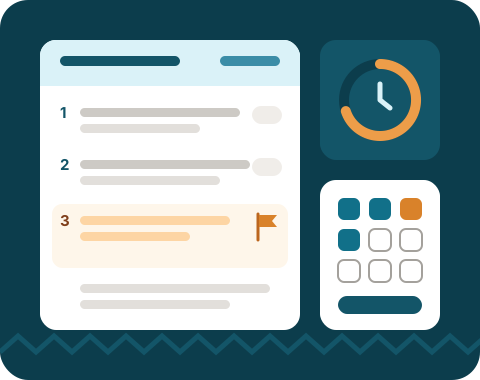
Timed exam mode
A visible timer, numbered questions and the marks for each one, like the paper itself.Navigate and flag
Move between questions, flag the ones to come back to and review anything unanswered before you submit.Marking and a grade estimate
Automatic marking where possible, with your score, percentage and an estimated grade.What to study next
Strong and weak areas, with the lessons and practice that close the gaps.
Start your run-in today
Create your account, choose your exam session and get a plan for the weeks you have left.